
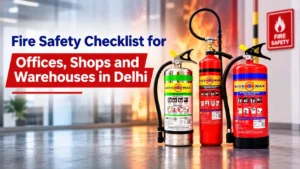
Fire Safety Checklist for Offices, Shops and Warehouses in Delhi
Home » Fire Safety Checklist for Offices, Shops and Warehouses in Delhi
Get the Best Fire Protection Solution for Your Property
Need help choosing the right fire extinguisher or fire safety system? Savemax offers ISI-marked fire extinguishers and industrial fire protection solutions trusted across India.
Related Posts
CO2 Type Fire Extinguisher: Uses, Benefits and Safety Precautions
October 24, 2026
No Comments
Read More »
How Many Kg Fire Extinguisher Do You Need for Your Office, Shop, or Home?
September 15, 2026
No Comments
Read More »
MS Body vs Stainless Steel Fire Extinguisher: Which One Should You Buy?
September 7, 2026
No Comments
Read More »
Which Fire Extinguisher Is Safe for Electrical & Server Room Fires?
August 26, 2026
No Comments
Read More »
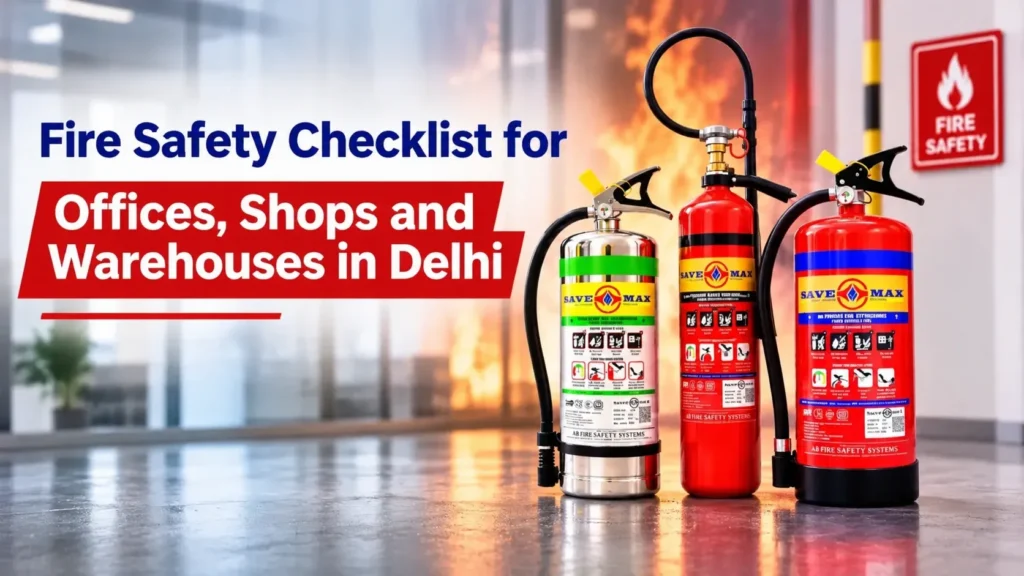
Quick Answer: Good fire safety equipment checklist should include these five items: proper functioning of fire extinguishers, alarms and smoke detectors, well-defined escape routes, proper electric wiring, and fire audits that have valid documents. These checks should be done every month, and corrections made immediately with written documentation to show at any inspection time.
One single spark can destroy all the hard work of many years within no time at all. In Delhi, where there are crowded markets, stored stock, and old wiring, fire becomes a major hazard for businesses, irrespective of their sizes.
The good thing is that majority of fires can be prevented through regular and simple inspections. This fire safety checklist for offices, shops and warehouses includes fire extinguishers, alarms, exit routes, wiring and audit, thus ensuring your employees, inventory and property are safe all the time. Use it as a handy fire safety equipment checklist for your premises. Let’s begin!
Why Is Fire Safety Important for Commercial Properties in Delhi?
Delhi’s commercial areas are crowded, and a small fire can spread fast. Here is why fire safety needs your attention:
- Narrow lanes and packed buildings make it hard for fire trucks to reach on time.
- Stored paper, cloth, plastic and cartons catch and burn very fast.
- Overloaded wiring and old switches are a common cause of fires.
- A fire can stop your work for weeks and cause heavy losses.
- Your staff and customers trust you to keep the place safe.
Complete Fire Safety Checklist for Offices, Shops and Warehouses in Delhi
Go through these five steps one by one. They suit any office, shop or warehouse, and you can check them yourself.
1. Install Appropriate Fire Extinguishers
Extinguishers are your first line of defence when a small fire starts. Pick the right type for each area, such as ABC for general use and CO2 for electrical equipment. A regular fire extinguisher inspection checklist keeps them ready. Not sure about types? Read our guide on types of fire extinguishers.
Checklist:
- Pressure gauge needle is in the green zone
- Safety pin and seal are in place
- No dents, rust or leaks on the body
- Hose and nozzle are clean and not blocked
- Service or refill date on the label is valid
- Extinguishers are mounted at easy reach, near exits
Important: Never hide an extinguisher behind boxes or lock it in a cabin. Anyone should be able to grab it in seconds.
2. Check Fire Alarm and Smoke Detection Systems
Alarms and smoke detectors warn people before a small fire turns into a big one. A proper fire alarm system inspection makes sure every detector, siren and panel works when needed. Test them on a fixed schedule instead of waiting for an emergency, and keep a written log of every test.
Checklist:
- Smoke detectors are clean and fitted in every room and storage area
- Alarm panel and siren are tested every month
- Manual call points are easy to see and reach
- Battery and power backup are working
- No detector is covered, painted over or removed
- Emergency numbers are displayed near the panel
Important: If any detector or panel shows a fault, repair it the same day. A faulty alarm is as bad as having none.
3. Keep Emergency Exits Clear and Accessible
In a fire, people need a clear way out within seconds. Blocked doors and cluttered passages make a bad situation worse. Keep every exit open, well lit and easy to find, even during busy times like festival sales or heavy stock days. Do not treat the back door as storage space.
Checklist:
- Exit doors open easily from inside and are never locked during work hours
- Passages and staircases are free of boxes and stock
- Exit signs are lit and visible, even in a power cut
- Emergency lights are working
- A simple evacuation map is displayed on each floor
- Staff know the assembly point outside
Important: Run a fire drill at least twice a year. People remember what they practise, not what they read on a notice.
4. Inspect Electrical Wiring and Equipment Regularly
Faulty wiring is one of the most common causes of fire in shops and offices. Loose joints, old cables and overloaded sockets heat up quietly. Get your wiring checked by a licensed electrician, and keep the right extinguisher near panels, as explained in our electrical fire extinguisher guide.
Checklist:
- Wires are not frayed, cracked or exposed
- Sockets and extension boards are not overloaded
- MCBs and switches are in good working condition
- Electrical panels are closed, clean and clear of stock
- ACs, heaters and heavy machines have proper, separate connections
- Non-essential equipment is switched off at closing time
Important: Never run heavy loads on damaged extension boards. Burnt plugs or darkened sockets are early warning signs, so replace them at once.
5. Maintain Fire Safety Compliance and Conduct Regular Fire Audits
Having equipment is not enough. You also need valid papers and regular checks. Find out if your building needs a fire NOC from the Delhi Fire Service, keep all certificates updated, and schedule yearly audits and servicing through a trusted in-house AMC and refilling team. Do not wait for a notice or an incident.
Checklist:
- Fire NOC and other required certificates are valid and easy to find
- Extinguishers are refilled and serviced on time
- A yearly fire audit is done and the report is saved
- Staff training records are kept up to date
- Every inspection and repair is written in a log book
- Gaps found in the audit are fixed within a fixed deadline
Important: Keep all fire safety papers in one file. Inspectors can ask for them at any time, so they must be ready.
Fire Safety Checklist for Offices in Delhi
Offices have computers, ACs and a lot of paper. Use this fire safety checklist for offices every month:
- Keep extinguishers near the pantry, server area and exits
- Switch off computers, printers and ACs when not in use
- Keep files and paper away from heaters and sockets
- Mark exits clearly on every floor
- Train a few staff as fire wardens
Additional recommendation: Not sure how many extinguishers your office needs? Check our extinguisher size guide and keep emergency numbers on every floor.
Fire Safety Checklist for Shops and Retail Stores in Delhi
Shops hold cloth, plastic, packaging and electronics, which burn fast. Follow this fire safety checklist for shops daily:
- Keep stock away from lights, wires and electric boards
- Leave a clear walkway to the exit
- Switch off lights, signboards and machines at closing
- Keep one extinguisher near the counter and one near the exit
Additional recommendation: Avoid stacking goods near the shop entrance. If the front catches fire, that stock blocks your only way out.
Fire Safety Checklist for Warehouses in Delhi
Stock is packed tight and stacked high in warehouses, so fire spreads quickly. Use this fire safety checklist for warehouses and these warehouse fire safety guidelines:
- Leave gaps between racks and keep stock away from the ceiling
- Keep trolley-mounted extinguishers near loading bays
- Ban smoking and open flames inside
- Keep forklifts and chargers away from stock
Additional recommendation: Store flammable items like paint, oil and chemicals in a separate, well-aired area, away from regular stock and heat.
Common Fire Safety Mistakes Businesses Should Avoid
Many fires turn serious because of small mistakes that are easy to fix. Watch out for these common ones in your workplace.
- Keeping expired or empty extinguishers
- Blocking exits with stock
- Ignoring alarm and detector tests
- Overloading sockets and extension boards
- Skipping fire drills
- Hiding extinguishers behind boxes
- Delaying yearly audits and servicing
Fix these today and your business becomes much safer. Fire safety is a daily habit, not a one-time task.
Protect Your Business with Reliable Fire Safety Solutions in Delhi NCR!
Looking for a reliable fire extinguisher in Delhi ? Keep your office, shop or warehouse prepared for fire emergencies with quality fire extinguishers, timely refilling and regular maintenance. Choose Savemax, a fire safety equipment manufacturer since 1972, to help protect your employees, property and valuable inventory.
Conclusion
Fire safety does not need big budgets or complicated steps. It needs regular checks on extinguishers, alarms, exits, wiring and papers, plus a team that knows what to do. Use this checklist every month, and follow the warehouse fire safety guidelines if you store stock in bulk.
Need certified extinguishers, refilling or yearly maintenance in Delhi NCR? Savemax has been making fire safety equipment since 1972 and can help you stay inspection-ready. Because when a fire starts, the only thing that matters is what you did before it.
Frequently Asked Questions
1. How often should I inspect fire extinguishers in my business?
Do a quick visual check every month for gauge, pin, seal and body condition. Get a professional service at least once a year, and refill right after any use, even if you only used it a little.
2. How often should a fire alarm system be tested?
Most businesses test the alarm panel and manual call points once a month. A trained technician should do a full fire alarm system inspection at least once a year, including detectors, batteries and wiring.
3. Is a fire NOC compulsory for offices, shops and warehouses in Delhi?
It depends on the building type, height and area. Many commercial buildings and bigger warehouses may need a fire NOC from the Delhi Fire Service. Check with the department or a fire safety consultant before you start or renew.
4. Which fire extinguisher is best for offices and shops?
ABC dry powder extinguishers suit most offices and shops because they handle paper, cloth, flammable liquids and gas fires. Add a CO2 extinguisher near server rooms and electrical panels. Pick the capacity based on your floor area.
5. What fire safety equipment does a warehouse need?
A warehouse needs extinguishers (including bigger trolley units), smoke detectors, alarms, hydrant or hose reels where required, emergency lights, exit signs and clear aisles between stock. The exact setup depends on warehouse size and what you store.

ABOUT THE AUTHOR
Team Savemax
Team Savemax is dedicated to sharing practical knowledge on fire safety, fire extinguishers, firefighting equipment, compliance, maintenance, and fire protection solutions. With decades of experience in the fire safety industry, Savemax provides insights to help businesses, institutions, and individuals make informed fire-safety decisions.
🔥 Fire Safety Experts