
Not every fire is the same – and not every fire extinguisher works on every fire.
This is the single most important thing to understand before you buy a fire extinguisher for your home, office, or business. A fire extinguisher is not a universal tool. Use the wrong type on the wrong fire and you risk making the fire worse – or putting yourself in serious danger.
In India, fire extinguishers and fire classes are both defined under BIS (Bureau of Indian Standards) guidelines. Every certified extinguisher has a label that clearly tells you which fire it is made for. But most people never look at the label – they just buy what looks familiar.
This guide changes that. By the end of it, you will know exactly which type of fire extinguisher handles which fire – and which one belongs in your building.
First, Understand the 6 Types of Fires in India
Before we talk about extinguishers, you need to know what kind of fire you are dealing with. Fires are grouped into classes based on what is burning. This classification is defined by the Bureau of Indian Standards under IS 2190.
There are six fire classes in India:
Class A – Things That Burn and Leave Ash
What catches fire: Wood, paper, cardboard, fabric, rubber, most plastics Where it usually happens: Offices, homes, schools, hospitals, warehouses, shops
a
Class A is the most common type of fire in everyday environments. These are the fires that start from a pile of paper catching a spark, furniture catching flame, or wooden furniture near a heat source.
Class B – Liquid Fires
What catches fire: Petrol, diesel, kerosene, paint, solvents, grease Where it usually happens: Petrol pumps, garages, paint stores, chemical facilities, workshops
These fires burn on the surface of a liquid. The key danger with Class B fires is that the burning liquid can spread quickly if disturbed – which is why water must never be used on them. Water causes the burning liquid to scatter and the fire to spread.
Class C – Gas Fires
What catches fire: LPG, CNG, cooking gas, methane, acetylene Where it usually happens: Gas cylinder storage areas, domestic kitchens with gas connections, industrial welding areas, LPG bottling plants
With Class C fires, the most important first action is to shut off the gas supply before attempting suppression. If the gas supply stays on, the fire will keep coming back even after you discharge the extinguisher.
Class D – Metal Fires
What catches fire: Magnesium, aluminium, titanium, sodium, potassium in powder or shaving form.
Where it usually happens: Metal fabrication units, foundries, certain chemical plants, defence manufacturing
Class D fires are rare outside industrial settings. They require a specialised dry powder extinguisher – standard ABC powder does not work here and can actually react badly with some burning metals.
Class E – Electrical Fires
What catches fire: Live electrical equipment – switchboards, electrical panels, computers, wiring, motors, transformers.
Where it usually happens: Offices, server rooms, data centres, electrical control rooms, factories.
This is one of the most misunderstood fire classes. Two things to know: first, water and foam conduct electricity – using them on a live electrical fire puts the person using the extinguisher at serious risk of electrocution. Second, once you switch off the power source, the fire is no longer a Class E fire – it becomes whatever class the underlying material falls into.
Class F – Cooking Oil and Fat Fires
What catches fire: Vegetable oil, animal fat, deep-frying oil at high cooking temperatures. Where it usually happens: Restaurant kitchens, hotel kitchens, cloud kitchens, school canteens, food courts
Class F fires are among the most dangerous to deal with incorrectly. Hot cooking oil burns at extremely high temperatures. If you spray water on burning cooking oil, the water turns to steam in a fraction of a second and throws burning oil outward – causing serious burns and spreading the fire instantly. This happens even with a small amount of water.
Types of Fire Extinguishers in India – What Each One Does
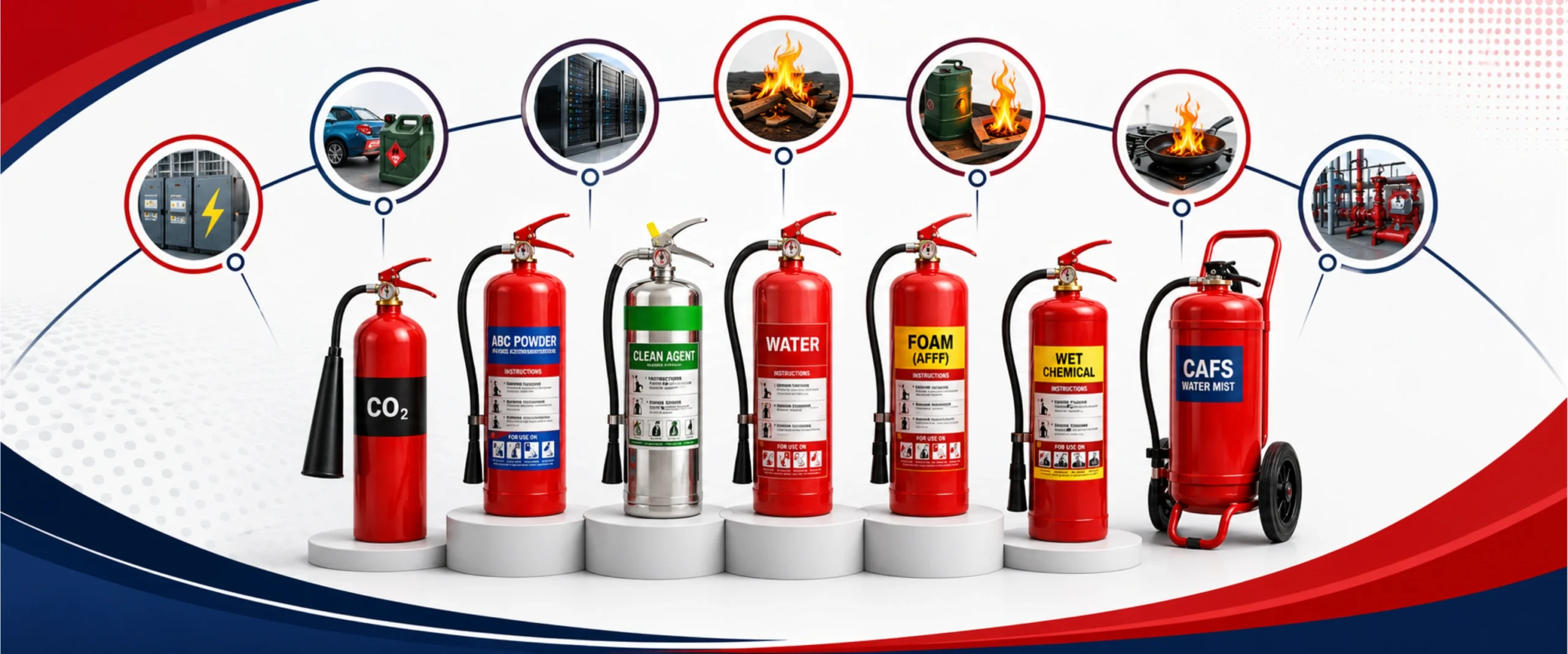
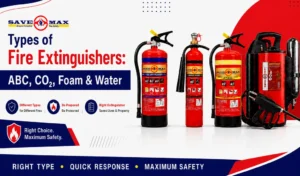
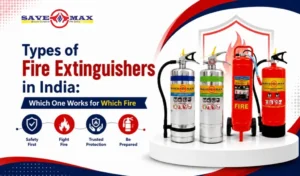
Now that you know the fire classes, here is a complete look at the types of fire extinguishers available in India, what they do, and exactly which fires they are made for.
1. ABC Dry Powder Fire Extinguisher
This is the most widely used fire extinguisher across India. Walk into almost any office, school, factory, or residential building and you will find an ABC dry powder unit on the wall.
It works by releasing a cloud of fine powder that interrupts the fire and cuts off its oxygen supply. It covers Class A, Class B, Class C, and Class E fires – which is why it is considered a general-purpose unit.
- Who it is for: Offices, schools, shops, factories, residential apartments, warehouses, petrol pumps, vehicle depots
- Sizes available: 1 Kg, 2 Kg, 4 Kg, 6 Kg, 9 Kg for portable use. Browse our full portable fire extinguisher range for MS and SS body options across all capacities. Trolley-mounted units available from 25 Kg to 75 Kg for large industrial areas.
- Not suitable for: Class D (metal) fires and Class F (cooking oil) fires
2. CO2 Fire Extinguisher
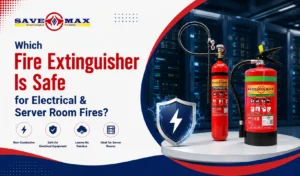
CO2 extinguishers are the right choice wherever you have electrical equipment and you cannot afford to leave any residue behind.
They discharge carbon dioxide gas, which removes the oxygen the fire needs to keep burning. When the CO2 clears, it leaves nothing behind – no powder, no foam, no liquid. The equipment is clean and ready to use again.
CO2 extinguishers store carbon dioxide as a liquid under high pressure, typically 55–60 bar. On discharge, it converts to gas and snow, displacing oxygen and removing heat. It leaves zero residue.
- Who it is for: Server rooms, data centres, electrical control panels, UPS rooms, bank equipment rooms, laboratory equipment areas, control rooms
- Sizes available: 2 Kg, 3 Kg, 4.5 Kg for portable use. For larger electrical areas, our trolley mounted CO2 fire extinguishers are available in 6.5 Kg, 9 Kg, and 22.5 Kg twin-cylinder configurations.
- Two safety points: The discharge horn gets extremely cold during use – never hold it with a bare hand. In small, enclosed rooms, CO2 displaces the room’s oxygen along with the fire’s oxygen – discharge and leave the room quickly.
- Works on: Class B and Class E fires
- Not suitable for: Class A (solid combustibles), Class C (gas), Class D (metals), Class F (cooking oil)
3. Clean Agent Fire Extinguisher
Clean agent extinguishers are designed for environments where both people and sensitive equipment are present – and where neither powder residue nor oxygen displacement is acceptable.
They use a special gas agent (HFC-based or similar) that suppresses fire without leaving any trace and without affecting the oxygen levels in the room. A person can stay in the room during or after discharge without risk.
- Who it is for: Hospital patient areas, ICUs, operating theatres, museum archives, bank data rooms, pharmaceutical laboratories, occupied server halls, heritage buildings
- Sizes available: 2 Kg, 4 Kg, 6 Kg portable units
- Works on: Class A, Class B, and Class E fires.
- Not suitable for: Class C (gas), Class D (metals), Class F (cooking oil)
- Cost note: Clean agent extinguishers cost more than CO2 or ABC powder. In environments where patient safety or irreplaceable assets are at stake, this cost is fully justified.
4. Water Fire Extinguisher
Water extinguishers do exactly what the name says – they discharge pressurised water onto the fire, cooling the burning material until it can no longer sustain the fire.
They are effective on Class A fires only – solid materials like wood, paper, and fabric. Outside of that, they should not be used. They are the cleanest and most environmentally safe option for the right type of fire.
- Who it is for: Libraries, paper warehouses, bookbinding units, wood storage, timber factories – any space with purely solid combustible material and no electrical equipment or flammable liquids
- Sizes available: 9 Litres
- Works on: Class A fires only
Never use on: Class B (liquid), Class C (gas), Class E (electrical), Class F (cooking oil)
5. Foam Fire Extinguisher (AFFF)
Foam extinguishers work by creating a foam blanket over the surface of a burning liquid. The foam seals off the burning liquid from the air above it, cutting off oxygen supply and preventing vapour from escaping – which is what keeps a liquid fire going.
They are effective on both Class A and Class B fires, which makes them a practical choice for places that have both solid material and flammable liquid risks.
- Who it is for: Petrol pumps, vehicle workshops, fuel depots, paint stores, chemical plants, marine environments, airports
- Sizes available: 9 Litres portable. Trolley-mounted units in 25 Litres and 45 Litres for large-scale industrial or aviation use.
- Works on: Class A and Class B fires
- Not suitable for: Class E (electrical), Class F (cooking oil), Class C (gas under pressure)
6. Wet Chemical Fire Extinguisher (Kitchen Fire Extinguisher)
This extinguisher is made specifically for commercial kitchen fires involving cooking oil. No other type of extinguisher can safely handle a cooking oil fire – and this point is not optional.
When cooking oil catches fire at high temperature, it burns intensely and re-ignites almost immediately if not handled correctly. Wet chemical extinguishers discharge a fine mist of a special solution that rapidly cools the oil and forms a protective soap-like layer over the surface – stopping the fire and preventing it from lighting again.
- Who it is for: All commercial kitchens – hotels, restaurants, cloud kitchens, canteens, school cafeterias, catering facilities, food processing units
- Sizes available: 2 Litres, 4 Litres, 6 Litres
- Works on: Class F fires (and Class A as secondary)
- Not suitable for: Electrical fires, flammable liquid fires, gas fires
- Important: This extinguisher is mandatory in all commercial kitchens under Indian fire safety regulations. It is not interchangeable with an ABC powder or CO2 unit for kitchen use.
7. CAFS Water Mist Fire Extinguisher
CAFS (Compressed Air Foam System) Water Mist extinguishers are a newer, advanced type available in India. They combine very fine water droplets with compressed air foam to suppress fires while causing minimal water damage.
They are particularly suited for environments where you need to suppress a fire without soaking the space – hospitals, heritage buildings, data centres, and forest fire response.
- Who it is for: Hospitals and healthcare facilities, heritage buildings, museums, aviation maintenance areas, forest fire brigades, large commercial kitchens
- Available in: 9-litre and 12-litre wearable backpacks for field and inaccessible areas. 45-litre and 50-litre trolley-mounted units for larger areas. See the full CAFS water mist extinguisher range for detailed specifications and configurations.
- Works on: Class A, Class B, and Class F fires
- Certifications: CPWD Approved, Euro Certified
Which Fire Extinguisher Should You Buy?
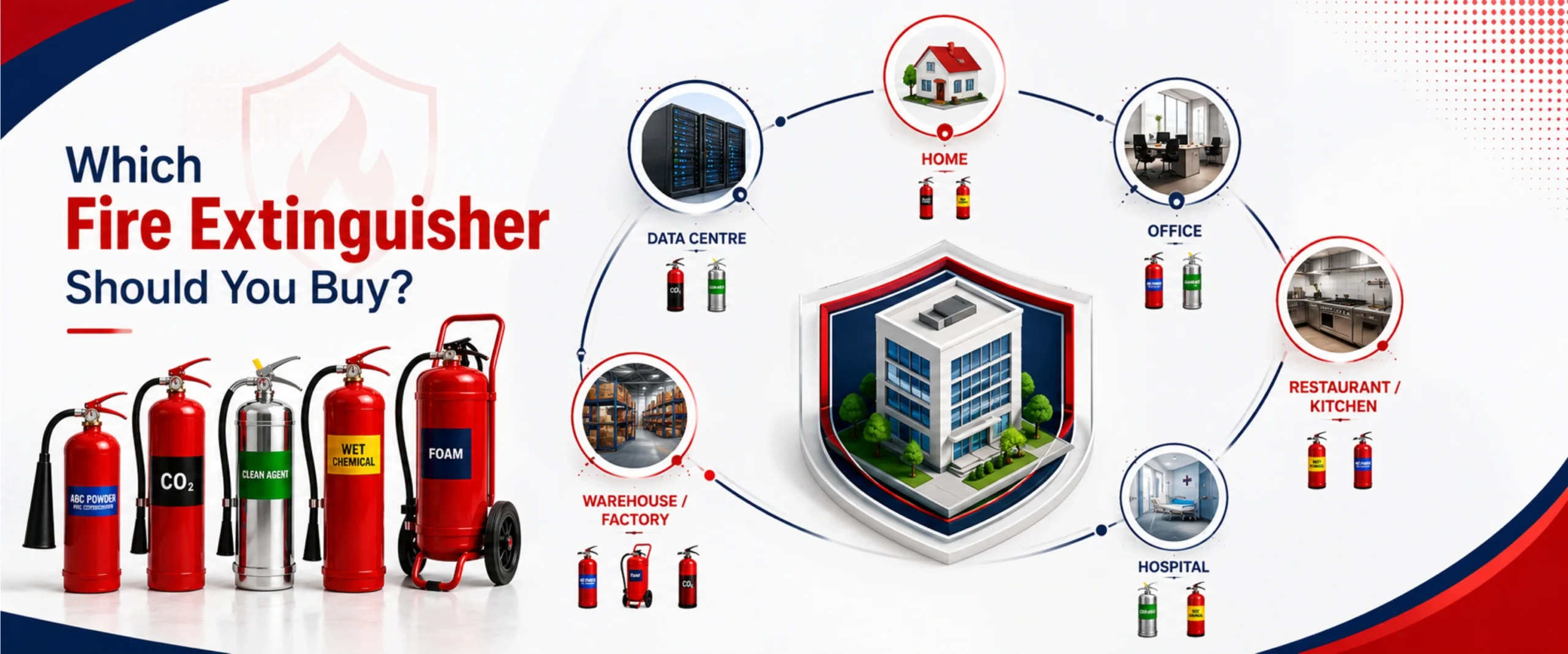
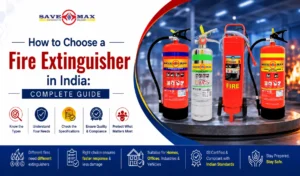
Here is a simple way to decide. If you want a deeper breakdown by building type, hazard level, and placement rules, read our complete guide on how to choose the right fire extinguisher for your building in India.
- For a home or small apartment: A 2 Kg ABC Dry Powder extinguisher for general use. A 2-litre Kitchen Fire Extinguisher near your gas stove. Two extinguishers, two fire classes covered.
- For an office space: 4 Kg or 6 Kg ABC Dry Powder on every floor. A CO2 or Clean Agent extinguisher in the server room and at the electrical panel.
- For a restaurant or hotel kitchen: A Wet Chemical Kitchen Fire Extinguisher is non-negotiable. Supplement with ABC Dry Powder at the restaurant floor and guest area.
- For a warehouse or factory: 9 Kg ABC Dry Powder portable units or 25 Kg trolley units for storage areas. Foam trolleys for any zone with flammable liquids. CO2 at all electrical areas.
- For a hospital or healthcare facility: Clean Agent extinguishers in patient areas, ICUs, and equipment rooms — not ABC powder. Kitchen Fire Extinguisher in the kitchen.
- For a data centre or server room: CO2 for unmanned or restricted spaces. Clean Agent for occupied server halls where staff may be present during a fire event.