
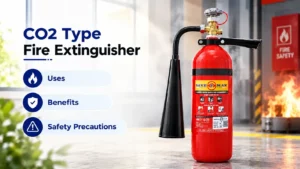
CO2 Type Fire Extinguisher: Uses, Benefits and Safety Precautions
Home » CO2 Type Fire Extinguisher: Uses, Benefits and Safety Precautions
Get the Best Fire Protection Solution for Your Property
Need help choosing the right fire extinguisher or fire safety system? Savemax offers ISI-marked fire extinguishers and industrial fire protection solutions trusted across India.
Related Posts
How Many Kg Fire Extinguisher Do You Need for Your Office, Shop, or Home?
September 15, 2026
No Comments
Read More »
MS Body vs Stainless Steel Fire Extinguisher: Which One Should You Buy?
September 7, 2026
No Comments
Read More »
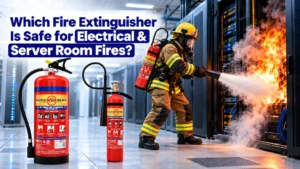
Which Fire Extinguisher Is Safe for Electrical & Server Room Fires?
August 26, 2026
No Comments
Read More »
Types of Fire Extinguishers in India: Which One Works for Which Fire
July 24, 2026
No Comments
Read More »
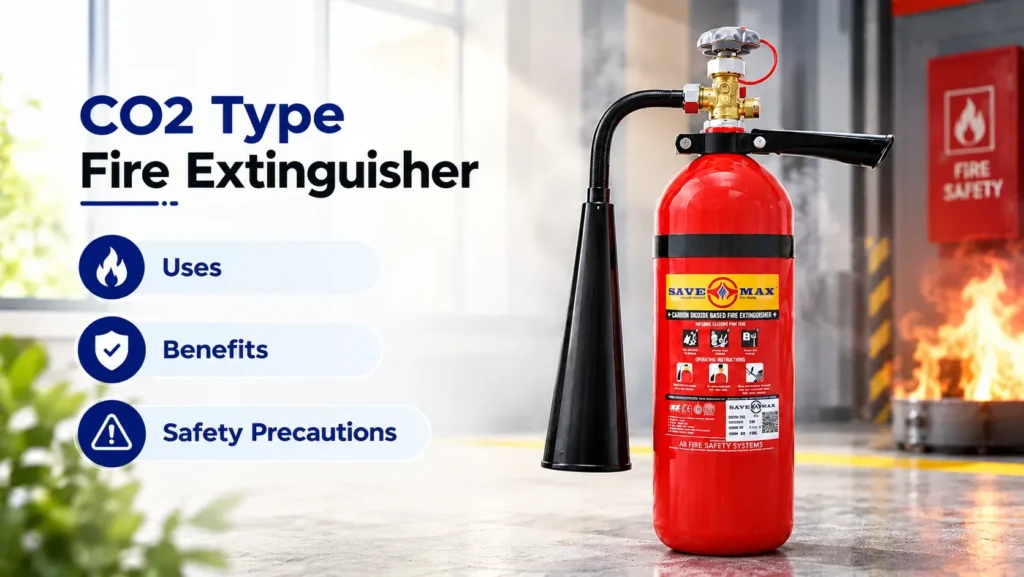
A CO2 extinguisher is often the right choice when fire threatens electrical equipment, server hardware, control panels, or certain flammable liquids. A CO2 type fire extinguisher releases carbon dioxide without leaving powder, foam, or water behind, which makes cleanup easier around sensitive equipment. That clean discharge is useful, but CO2 also brings specific safety risks, especially in confined spaces and around the freezing-cold discharge horn.
This guide explains where a CO2 cylinder fire extinguisher works best, what benefits it offers, which fires it should not be used on, and how to operate one safely in an emergency at your workplace.
Where Is a CO2 Type Fire Extinguisher Used?
A CO2 type fire extinguisher works best around energised electrical equipment and suitable Class B flammable-liquid hazards. It is especially useful where powder, foam, or water could cause extra damage.
Indian Standard IS 2190:2024 includes carbon dioxide among the extinguisher types that may be used for hazards involving energised electrical equipment when the extinguisher has been tested and marked for that use.
Electrical Panels and Energised Equipment
CO2 is a practical choice around electrical panels, switchgear, control panels, UPS units, and similar equipment.
Why? Carbon dioxide does not conduct electricity in the same way water does, and it leaves no powder coating behind after discharge.
There is one important detail, though. IS 2190:2024 states that CO2 extinguishers fitted with metal horns are not considered safe for energised electrical equipment. Always check the markings and design of the unit rather than assuming every CO2 extinguisher suits every electrical hazard.
Server Rooms and Data Centres
Server rooms have two problems during a fire: the fire itself and the damage that the extinguishing medium can cause.
Dry powder can settle inside electronics. Water can damage equipment that survives the initial incident.
CO2 leaves no chemical residue, making it useful for small, early-stage fires around servers, telecom systems, and data equipment.
Savemax specifically lists its portable CO2 extinguishers for server rooms, data centres, electrical panels, control rooms, telecom installations, and laboratories.
Also Read:Which Fire Extinguisher Is Safe for Electrical & Server Room Fires?
Laboratories and Precision Equipment Areas
Laboratories, testing facilities, and control rooms often contain instruments that do not respond well to water or powder.
A CO2 extinguisher can suppress an appropriate fire without leaving a layer of extinguishing agent across the equipment.
That does not mean you should discharge CO2 freely in a closed laboratory. If the room is small or poorly ventilated, CO2 concentration can become a safety issue for people inside.
Flammable Liquid Fires
CO2 can also deal with appropriate Class B hazards involving flammable liquids.
These may include certain paints, solvents, oils, and fuels.
However, pressurised or flowing flammable-liquid fires need more care. IS 2190:2024 advises selecting extinguishers for those hazards with input from a qualified fire professional, the relevant authority, or the manufacturer.
What Are the Benefits of a CO2 Cylinder Fire Extinguisher?
The main advantage of a co2 cylinder fire extinguisher is simple: it controls suitable fires without leaving water, foam, or powder behind.
It Leaves No Extinguishing Residue
Once discharged, CO2 disperses as a gas.
That makes cleanup much easier in places such as:
- Server rooms
- Electrical rooms
- Laboratories
- Control rooms
- Telecom areas
- Spaces with precision machinery
You still need to inspect any equipment exposed to the fire or extreme cold, but you do not have to remove dry powder from every surface afterward.
It Works Around Suitable Energised Electrical Equipment
CO2 is electrically non-conductive, which is why it is widely used around electrical hazards.
Current BIS guidance requires extinguishers used around energised equipment to be tested and marked as suitable for that application.
The safest approach is therefore to check the extinguisher’s actual rating and label, not choose one only because the cylinder contains CO2.
It Suppresses Fire Quickly
When released, carbon dioxide expands around the fire and reduces the oxygen available to sustain combustion. The rapid expansion also produces a cooling effect.
That can knock down a small fire quickly when you use the extinguisher on the correct hazard.
It Reduces Secondary Cleanup
Imagine extinguishing a small electrical-panel fire and then finding powder throughout nearby equipment. The fire may be out, but the cleanup has only started.
CO2 avoids that problem because it leaves no solid extinguishing agent behind.
For businesses with sensitive electronics, this can be an important practical advantage.
What Safety Precautions Should You Follow With a CO2 Type Fire Extinguisher?
A CO2 extinguisher may look straightforward, but you need to respect both the gas and the cold discharge.
Avoid Heavy CO2 Discharge in Confined Spaces
Carbon dioxide can displace breathable air.
In a small, poorly ventilated room, a large concentration can create an oxygen-deficient atmosphere. The risk becomes especially serious with fixed CO2 systems that release much larger quantities of gas.
If conditions become unsafe, leave. Do not remain inside simply because the flames appear to be getting smaller.
Keep Your Hands Away From the Discharge Horn
CO2 becomes extremely cold as it expands.
The horn and nearby discharge components can become cold enough to injure skin. OSHA specifically warns that touching a CO2 discharge horn during use can damage the skin.
Hold the extinguisher only by the parts designed for handling.
Keep Your Exit Behind You
Before attacking a fire, make sure smoke, heat, or flames cannot cut off your escape route.
Portable extinguishers are meant for small fires in their early stages. If the fire grows, the extinguisher empties, or you lose a safe path out, evacuate instead of trying to “finish the job.” Government fire-safety guidance treats extinguishers as first-response tools, not equipment for fighting developed fires.
Watch for Re-Ignition
CO2 can put flames out quickly, but it does not always cool burning material deeply.
Stay alert after discharge. If a material remains hot, the fire may start again when the CO2 disperses.
How to Use a CO2 Fire Extinguisher Cylinder Safely?
Use a fire extinguisher CO2 cylinder only when the fire is small, the extinguisher is suitable for the hazard, and you have a safe exit route. Follow the PASS method to operate it correctly.
- Step 1: Pull the Pin – Pull the safety pin to unlock the operating lever.
- Step 2: Aim at the Base of the Fire – Direct the horn toward the base of the flames rather than the top.
- Step 3: Squeeze the Handle – Press the operating lever to release the CO2.
- Step 4: Sweep Across the Fire – Move the discharge from side to side across the burning area while maintaining a safe position.
Follow the PASS Method: PASS stands for Pull, Aim, Squeeze, and Sweep. This method is also used in Indian government fire-safety training.
If the extinguisher does not control the fire quickly, leave the area and raise the alarm.
What Fires Should You Not Use a CO2 Fire Extinguisher On?
CO2 is useful, but it is not a universal extinguisher. To see which extinguisher works for which fire, read our guide to the types of fire extinguishers in India.
Deep-Seated Class A Fires
Wood, paper, fabric, and similar materials can continue to smoulder after the visible flames disappear.
CO2 may temporarily knock down the flame without cooling the material enough to stop re-ignition. Water-based or other appropriately rated extinguishers usually suit these hazards better.
Class D Metal Fires
Combustible metals require extinguishing media specifically rated for the particular metal hazard.
IS 2190:2024 requires dedicated Class D extinguishers for these risks.
Class F Cooking Oil and Fat Fires
Do not choose a standard CO2 extinguisher for a deep-fat fryer or cooking-oil fire.
Class F extinguishers are specifically intended for burning cooking oils and fats.
Large or Rapidly Spreading Fires
A portable cylinder cannot replace a fire-fighting system or emergency response team.
If heat increases rapidly, smoke fills the area, or flames spread beyond the original point, evacuate and call emergency services.
How Is a CO2 Cylinder Fire Extinguisher Different From a CO2 Fire Extinguishing System?
A portable extinguisher and a co2 fire extinguishing system both use carbon dioxide, but they serve very different purposes.
A portable CO2 extinguisher is a manually operated cylinder for tackling a small fire at an early stage.
A fixed CO2 system uses cylinders, pipework, controls, and discharge nozzles to protect a specific hazard or enclosure. Some systems flood an enclosed space with enough CO2 to suppress a fire.
That creates a much greater life-safety risk. Fixed systems need proper engineering, alarms, evacuation procedures, and safeguards because fire-extinguishing CO2 concentrations can be dangerous to people.
Do not treat the two products as interchangeable.
Which CO2 Cylinder Fire Extinguisher Size Should You Choose?
Choose the extinguisher according to the hazard, fire rating, equipment present, floor layout, and applicable fire-safety requirements—not simply by buying the largest cylinder available.
Savemax currently listsportable CO2 high-pressure extinguishers in 2 kg, 3 kg, and 4.5 kg capacities.
For a commercial or industrial site, consider:
- Type and size of fire hazard
- Electrical equipment present
- Required extinguisher rating
- Accessibility
- Travel distance
- Number of units needed
- Relevant site and fire-safety requirements
IS 2190:2024 bases extinguisher selection and placement on the hazard class, extinguisher rating, and location rather than one universal size rule.
Get the Best Fire Protection Solution for Your Property
Need help choosing the right fire extinguisher or fire safety system? Savemax offers ISI-marked fire extinguishers and industrial fire protection solutions trusted across India.
Conclusion
A co2 type fire extinguisher makes sense when you need clean fire suppression around suitable electrical equipment or certain flammable-liquid hazards. Its biggest strengths are zero residue, fast discharge, and suitability for sensitive equipment. Its limits matter just as much. Avoid using CO2 on unsuitable fire types, protect yourself from the cold discharge, and take confined-space risks seriously. Most importantly, match the extinguisher to the actual hazard before an emergency happens.Frequently Asked Questions
Can a CO2 type fire extinguisher be used on electrical equipment?
Yes, if the extinguisher has been tested and marked for energised electrical equipment. IS 2190:2024 specifically lists CO2 as an appropriate type while warning against CO2 extinguishers with metal horns for this use.
Does a CO2 fire extinguisher leave any residue?
No extinguishing powder, foam, or water remains after normal CO2 discharge. That is one reason businesses use it around servers, panels, and sensitive equipment.
Is a CO2 extinguisher safe to use inside a server room?
It can suit a small server-room fire, but ventilation and room size matter. High CO2 concentrations can create an asphyxiation hazard, so never remain in an unsafe enclosed space.
Can a CO2 cylinder fire extinguisher be used on wood or paper fires?
CO2 is generally not the right choice for deep-seated Class A fires such as wood or paper because the material can keep smouldering and reignite after the gas disperses.
What is the difference between a portable CO2 extinguisher and a CO2 fire extinguishing system?
A portable unit is manually operated for a small early-stage fire. A fixed system protects a designed hazard or enclosure using cylinders, controls, piping, and discharge nozzles.

ABOUT THE AUTHOR
Team Savemax
Team Savemax is dedicated to sharing practical knowledge on fire safety, fire extinguishers, firefighting equipment, compliance, maintenance, and fire protection solutions. With decades of experience in the fire safety industry, Savemax provides insights to help businesses, institutions, and individuals make informed fire-safety decisions.
🔥 Fire Safety Experts